
healing childhood trauma Pt3
Sitting alone in our family therapist’s office, I finally asked the burning question that had plagued me for so long. “Do you think my parents will ever change?” I held my breath. This was it. I had summoned enough courage to say the words out loud. It had been a long, slow slog through suffering taking more than a decade to come to a conclusion. The decade of distress, I called it. That season began with the phone call I received from my father. “Your mother isn’t doing well.” That was the understatement of the year. She was having a nervous breakdown.

healing childhood trauma pt2 meaning
What Does Trauma Say About Me?
I sat on the back porch of our custom built little house in the woods of Virginia. I had everything I’d ever dreamed of except for one thing. A life. I thought I’d be free. Instead, I was drowning in Complex trauma symptoms. Anxiety had turned into constant terror. Depression as black as a starless night hovered over me all the time. Chronic pain and debilitating illness had pushed me into almost total isolation. I had plenty of time to mull over the past and torment myself.

healing childhood trauma PT 1 ACCEPTANCE
~The things we have stored away deep in our heart grapple with reality
In any type of loss, there is a period of time when the loss does not seem real. When dealing with the pervasive and multi-layered losses caused by long-term childhood abuse, the devastation is so profound, a word has been invented to describe it. CPTSD or complex post traumatic stress disorder also known as Complex trauma. Complex trauma is caused by a series of repeated abusive experiences in childhood. They can include but are not limited to maltreatment, verbal, emotional, sexual, physical abuse and neglect. The child finds themselves living in a situation in which they have little or no control nor is there any hope of escape. Complex trauma is invisible affecting our neurological, psychological and emotional development. It is exactly like growing up in an abusive cult. The mind-control and emotional damage are the same.

why are dysfunctional families so oppressive?
This is the sixth and last installment in a series of blogs on relationship patterns found in dysfunctional families. We have seen how abusive families put members in roles and the way abusers dodge responsibility by blaming others and forcing children to become adults. The family system is built on lies running over personal boundaries and destroying any healthy sense of self in its members. These relationship patterns work together to form a web of what I call oppression. It is so pervasive, so overwhelming, that leaving the family culture feels impossible.
what is enmeshment?
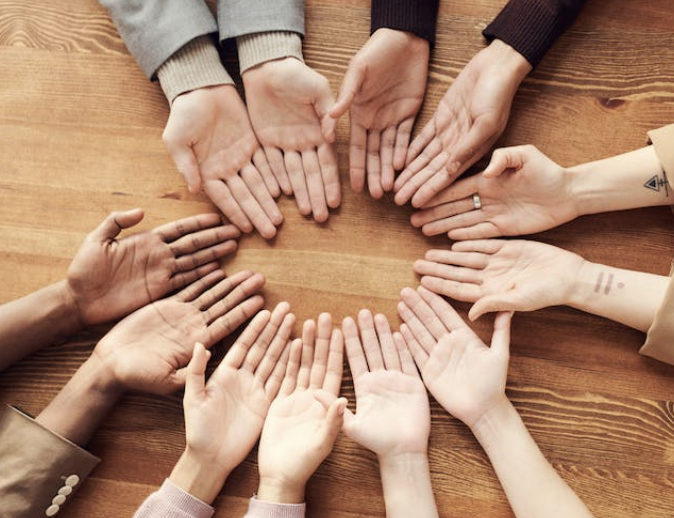
Enmeshment describes a relationship pattern between two people or a group of people in which personal boundaries are unclear. It is a hallmark of dysfunctional families and affects relationships inside and outside the family. Inside the family, personhood is not encouraged nor respected. Outside the family, people-pleasing compulsions can be crippling. Survivors of enmeshed systems struggle with a sense of self and may find it difficult to assert themselves. The boundary crossing is done in secret and can be emotional as well as physical.

The False Narrative
When you look at patterns within dysfunctional family systems, without fail, you will find the hallmark of a false narrative. The engine of the family system runs on untruths, half-truths, and constructed reality. And it doesn’t start where your story begins. It starts with the stories of your parents.
Abuse flourishes in the fertile soil of past abuse. My parents grew up in similar systems to mine and in many cases, even worse. My parents had an inability to be emotionally available. That may be the understatement of the year. They were totally checked out, unable to meet even the most basic emotional needs of each other or of their children. Even friendships were affected. It screwed up every single relationship in their lives.

What is Parentification? Roles in family systems Part II
My brother glanced at me as we “read” the emotional temperature of the room. What was tonight going to be like? My mother already had one of those frown’s on her face.
As expected, she began her nightly diatribe. “These kids have been terrible all day. I don’t know why they won’t listen. I’m so miserable. I can’t get any one of you to help me do anything.” She turned to me and screamed. “STOP KICKING THAT TABLE LEG.”
On cue, the terrifyingly dark cloud that was my father, rolled in. His voice commanded total obedience. “I don’t want to hear it tonight.”

What are the roles in dysfunctional family systems?
I was finally old enough to go to school and get away from my mother’s screaming, beatings and sexual abuse. My older brother and I smiled together as we got on the school bus that day. We were both glad to be getting away.
First grade was the first time in my life I felt understood. I loved everything about school. The snacks, the smell of mimeographed worksheets, learning how to read and write, the playground, and most of all, I loved my teacher, Mrs. King. She was one of the first adults who ever loved me back. It was a glorious year. And then...it came to an end.

How Trauma Impacts Relationships
How childhood trauma affects relationships
The early bonds of childhood forever imprint how we view the world and our place in it. In the video this week, Adrienne Wells expresses how trauma changed her world.
Her answer to the question, “How did trauma affect you?” is shattering.
“To me, it was normal.”
And therein lies the problem. All relationships are viewed through a broken lens. If your own mother and father betray you, what chance does a romantic relationship have? How can you parent when the only pattern you’ve experienced is abusive? If you view relationships with fear, guilt and threat, how can you ever learn to trust?

Five Life Management tips
I hope you see the past four weeks of life management as an invitation to the party of life. It will be the hardest journey you will ever take, but it will be worth it. Life management is not about exercise or staying on a schedule or doing meditation. It is about using those things to heal. It is about changing the inside so the outside can embrace joy. In this last blog of the series, I would like to leave you with these final thoughts.

what is meditation?
Meditation is ceasing daily activity and entering into a focused time of attention on the inner life.
Meditation has been proven to reduce stress and anxiety. It helps with depression management and can even lower your blood pressure and strengthen your immune system. But more than that, meditation gives trauma survivors an invaluable tool.

What are some life management skills?
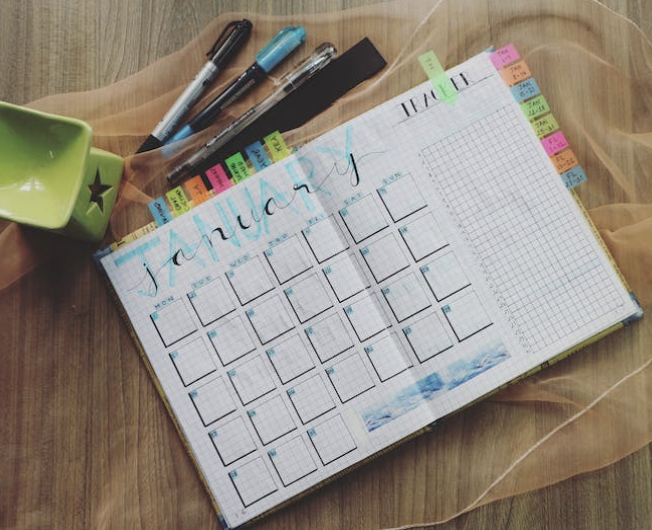
“Schedule?” You ask. “It can’t be that simple.” Well....I’m not talking about just any old schedule. And I’m not talking about the schedule you think you’re already on. How would you answer the following questions: Is my day driven by the most urgent thing that comes into my mind? Is my day driven by the most pressing thing that presents itself at my job? Do I find myself rushing through task after task all day long only to feel a sense of despair at the end of the day?
That breathless careening dash through life is a direct result of trauma laid down in the early years of childhood.
what is life management?
Trauma has a driven quality that affects everything about trying to manage your life. Relationship trauma is especially insidious. Deep betrayal causes a deep fear of trusting other people. I could never let down my guard long enough to let my mind, body or soul rest. When faced with challenges at work, I became a workaholic. Endlessly going over details then forgetting things that were requirements. I started every day with overwhelming anxiety.

What Narcissists don’t know about love
For many years I associated love with manipulation and guilt. Growing up, that was the only way it was ever expressed to me. Even Christmas presents made me feel guilty. That’s how abuse works. A child absorbs the negative messages and something as wonderful as love gets garbled.

Gift Giving Gone Wrong
I recently regifted a present. It was a journal someone had given me that I could not use. Another friend enjoyed journals, so instead of sending it to Goodwill, I regifted it. As I sat across from my friend, the gift bag between us, I thought of a terrible regifting story I had once heard. Then I thought about the journal I was about to give her. What if my name or a note to me was inscribed inside and I had missed it? I quickly told my friend it was a regift. In the end, the journal was blank and my friend could have cared less whether it was a regift or not. We laughed together as I shared why regifting made me so nervous. And now, I shall relate the same to you. This is the mother of all regifting stories.

Peace on earth
“Peace on earth, goodwill to men”
I have been a seeker of peace all my life. Peace of heart, that is. As a trauma survivor, that type of peace has been like chasing a greased pig at the county fair—hard to catch. The fourth verse in the old Henry Wadsworth Longfellow poem “I Heard the Bells on Christmas Day,” expresses the struggle.

tidings of joy
I’d like to tell you about impossibilities. I live in the hottest desert in North America, yet, we pick oranges in January. Out in my yard a giant succulent named fire stick ought to be green all year, but it turns bright orange in December. Flowers put forth their most glorious blooms in winter, die in springtime. Just today I noticed someone hanging a bunch of Christmas ornaments from their low growing palm tree. That palm tree has no business in the desert

Tidings of comfort
As the sun went down over the craggy desert mountains, I walked my little Chihuahua through my neighborhood enjoying the gorgeous sunset that is so unique to the southwestern United States. Broad strokes of color filled the sky as the lights inside the houses came on. I let out a long sigh. Wouldn’t it be wonderful if my parents or grandparents lived in one of these houses, I thought. I could walk up to their front door, the smell of dinner wafting from inside, and be welcomed home.

Cultivation
I watched as the old mule made one last pass across the field below my Grandmother’s house. Damp earth turned beneath the plow and I knew buried treasure would soon be exposed. My brother and I looked at one another in anticipation. It was the second half of the twentieth century, but at the moment, we existed in a strange time warp created by the isolation of the Blue Ridge Mountains of Virginia. Protected from change and insulated from the rest of the world, my Grandmother still used a mule for plowing and made her living from a small apple orchard on the side of a mountain.

Preparation
For a trauma survivor, there is no greater time for struggle and disappointment than the holidays. All the promises of hope, love, togetherness and peace are empty echoes of the things we always wanted but could never have.
When families and relationships are a nest of manipulation and emotional triggers, they do not make the holidays enjoyable. Wishing that things were different won’t help either, and responding the same way to the same triggers only gets us the same result; another holiday season filled with dread, hurt and misery.